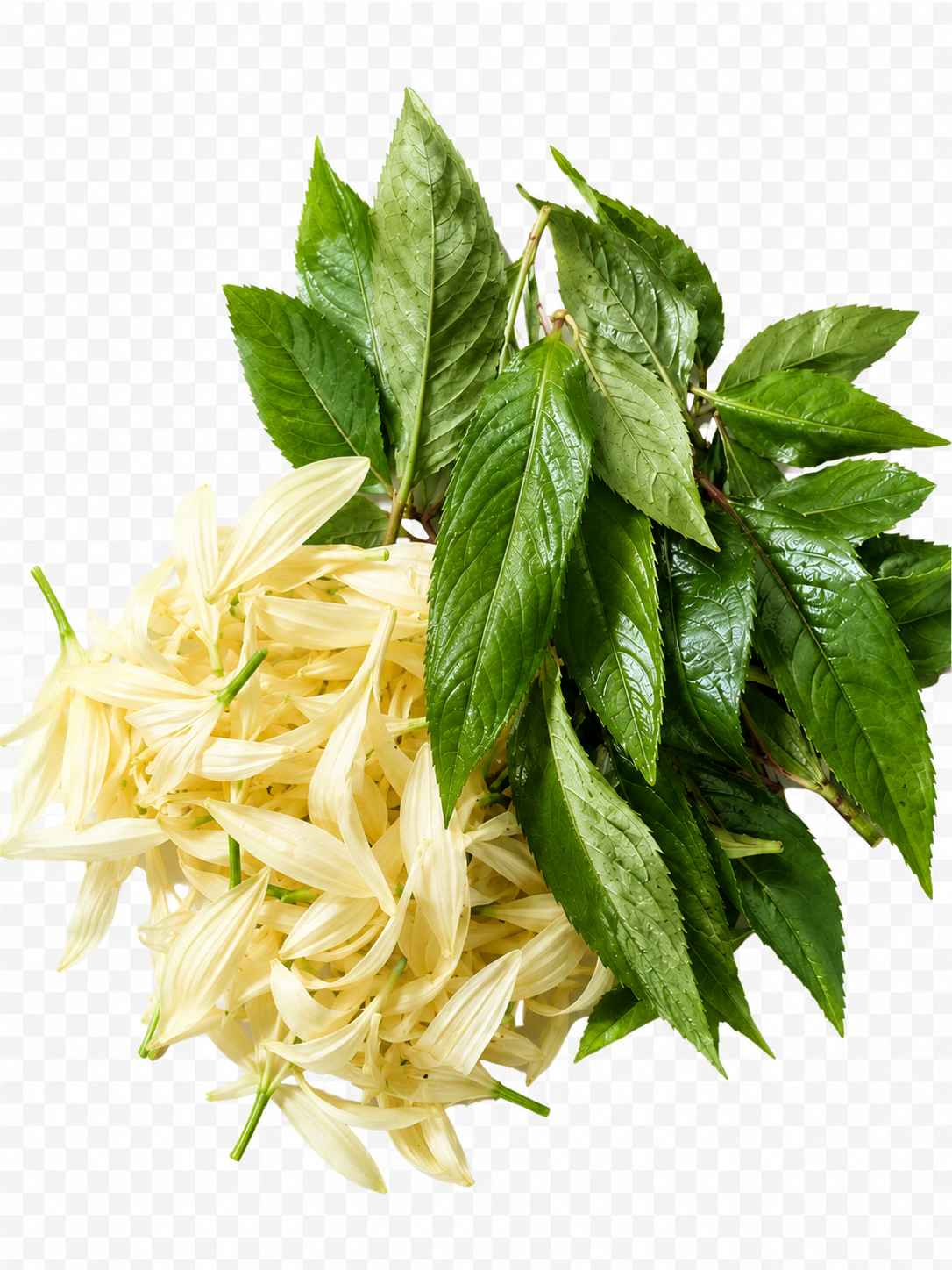
COMPARATIVE IN VITRO ANTIFUNGAL ACTIVITY OF SINGLE AND COMBINED EXTRACTS OF MICHELIA ALBA AND IMPATIENS BALSAMINA AGAINST CANDIDA ALBICANS
DOI:
https://doi.org/10.33992/meditory.v14i1.5095Keywords:
Candida albicans, Michelia alba, Impatiens balsamina, Antifugal activity, Plant extractAbstract
Background: Infections caused by Candida albicans are increasingly prevalent, particularly among immunocompromised individuals, and are further complicated by rising resistance to synthetic antifungal agents such as azoles. This has led to growing interest in traditional medicinal plants as alternative antifungal sources.
Objective: This study aimed to evaluate the in vitro antifungal activity of single and combined extracts of Michelia alba and Impatiens balsamina against Candida albicans.
Methods: Both plant extracts were obtained by ethanol maceration and phytochemically screened. Antifungal activity was evaluated using the disk diffusion method with 20 µL (20 mg/disc) of crude extract. Extract combinations (1:3, 1:1, and 3:1) were tested in triplicate, and data were analyzed using the Kruskal–Wallis and Mann–Whitney tests.
Results: Impatiens balsamina extract showed the largest inhibition zone (10.72 mm), followed by the 3:1 combination (9.91 mm) and Michelia alba extract (7.83 mm). All extracts exhibited moderate antifungal activity, with significant differences among groups (p = 0.009).
Conclusions: Both plant extracts, individually and in combination, demonstrated antifungal activity against Candida albicans, suggesting their potential as candidates for natural antifungal agents.
References
1. Lopes JP, Lionakis MS. Pathogenesis and virulence of Candida albicans. Virulence. 2022;13(1):89–121. doi:https://doi.org/10.1080/21505594.2021.2019950
2. Krishnan S, Ostrosky-Zeichner L. Invasive candidiasis in the intensive care unit. Journal of Fungi. 2025;38(2):82–91.
3. Soriano A, Honore PM, Puerta-Alcalde P, Garcia-Vidal C, Pagotto A, Gonçalves-Bradley DC, et al. Invasive candidiasis: current clinical challenges and unmet needs in adult populations. Journal of Antimicrobial Chemotherapy. 2023;78(7):1569–85. doi:10.1093/jac/dkad139 PubMed PMID: 37220664.
4. World Health Organization. WHO fungal priority pathogens list to guide research, development and public health action. World Health Organization; 2022.
5. Ponde NO, Lortala L, Ramage G, Naglika JR, Richardson JP. Candida albicans biofilms and polymicrobial interactions. Crit Rev Microbiol. 2021;47(1):91–111. doi:https://doi.org/10.1080/1040841X.2020.1843400
6. Malinovská Z, ˇConková E, Váczi P. Biofilm Formation in Medically Important Candida Species. Journal of Fungi. 2023;9(10):955. doi:https://doi.org/10.3390/jof9100955
7. Berkow EL, Lockhart SR, Ostrosky-Zeichner L. Antifungal Susceptibility Testing: Current Approaches. Clin Microbiol Rev. 2020;33(3):00069–19. doi:https://doi.org/10.1128/cmr.00069-19
8. Lee Y, Puumala E, Robbins N, Cowen LE. Antifungal Drug Resistance: Molecular Mechanisms in Candida albicans and Beyond. Chem Rev. 2020;121(6):3390–3411. doi:https://doi.org/10.1021/acs.chemrev.0c00199
9. Henriques M, Silva S. Candida Albicans Virulence Factors and Its Pathogenicity. Microorganisms. 2021;9(4):704.doi:https://doi.org/10.3390/microorganisms9040704
10. Cheng K kai, Nadri MH, Zalina Othman N, Rashid SNAA, Lim YC, Leong HY. Phytochemistry, bioactivities and traditional uses of Michelia× alba. Molecules. 2022;27(11):1–20. doi:10.3390/molekul27113450
11. Delgado Rodríguez FV, Weng Huang NT, Gutierrez AL, Arias Nunez D, Rosales Leiva C. Ethnobotany, Pharmacology and Major Bioactive Metabolites from Impatiens Genus Plants and their Related Applications. Pharmacogn Rev. 2023 Nov 28;17(34):338–81. doi:10.5530/phrev.2023.17.13
12. Nurhayati LS, Yahdiyani N, Hidayatulloh A. Perbandingan Pengujian Aktivitas Antibakteri Starter Yogurt dengan Metode Difusi Sumuran dan Metode Difusi Cakram. Jurnal Teknologi Hasil Peternakan. 2020;1(2):41–6. doi:https://doi.org/10.24198/jthp.v1i2.27537
13. Medic D, Cvijan BB, Bajcetic M. Impact of Antibiotic Consumption on Antimicrobial Resistance to Invasive Hospital Pathogens. Antibiotics. 2023;12(2):259. doi:https://www.mdpi.com/2079-6382/12/2/259
14. Otto WR, Arendrup MC, Fisher BT. A Practical Guide to Antifungal Susceptibility Testing. Journal of the Pediatric Infectious Society. 2023;12(4):214–221. doi:https://doi.org/10.1093/jpids/piad014
15. Asrianto A, Asrori A, Sahli IT, Hartati R, Mulyani W. Bioaktivitas In Vitro Ekstrak Etanol Biji Pinang terhadap Jamur Candida albicans. Health Information : Jurnal Penelitian. 2022 Jun 23;14(1):9–18. doi:10.36990/hijp.v14i1.443
16. Safrina. Uji Aktivitas Antimicrobial dan Kandungan Senyawa Kimia Bunga Cempaka Putih (Michelia Alba DC). Jurnal Ilmiah Guru Madrasah. 2022;1(2):83–96. doi:https://doi.org/10.69548/jigm.v1i2.9
17. Ma W, Ji J, Zhang B, Sun W, Zhao J, Zhang J, et al. Antifungal Activity of Sesamol on Pestalotiopsis neglecta: Interfering with Cell Membrane and Energy Metabolism. Journal of Fungi. 2024;10(7):488. doi:https://www.mdpi.com/2309-608X/10/7/488
18. Kurniawati D. Formulasi dan Uji Aktivitas Antiseptik dari Bahan Alam Kulit Jeruk Nipis, Daun Sirih dan Tanaman Bundung terhadap Staphylococcus aureus dan Candida albican. FARMASIS: Jurnal Sains Farmasi. 2021;2(1):25–31. doi:https://doi.org/10.36456/farmasis.v2i1.3622
19. Mendra NNY, Aryantini KD, Juliadi D. Formulasi Gel Ekstrak Metanol Bunga Cempaka Putih (Magnolia alba) sebagai Antijerawat terhadap Bakteri Staphylococcus aureus. Jurnal Farmasi Indonesia. 2024;21(2):117–123. doi:https://doi.org/10.31001/jfi.v21i2.2152
20. Ramadhan AN, MK Antony, SP Pradana, Dewiyeti S. Michelia alba: A Review on Its Biological Profile and Ethnobotany in Java. Jurnal Indonesia Sosial Teknologi. 2025;6(1):69–89. doi:https://doi.org/10.59141/jist.v6i1.8886
21. Bawa IGAG, Santi SR, Rita WS, Suryanadi O, Indyan G. Active compounds of Michelia champaca bark extract against Curvularia verruculosa fungi causing leaf spot disease in rice (Oryza sativa L.). Journal of Applied and Natural Science. 2024;16(1):420–426. doi:https://doi.org/10.31018/jans.v16i1.5406
22. V Rajeswari, Gunasekar B, Chinnasamy S. Potential of Impatiens balsamina Leaf Extract against Quorum Sensing in Pseudomonas aeruginosa PA01. J Pure Appl Microbiol. 2022;16(3):1931–1942. doi:https://doi.org/10.22207/JPAM.16.3.40
23. Fridayanthi PU, Wijaya MD, Udiyana DPC, Indraningrat AAG, Setiabudy M. Phytochemicals and Antibacterial Activity of Impatiens balsamina L. Leaf Extracts Against Gram-Positive and Gram-Negative Bacteria. Biology, Medicine, & Natural Product Chemistry. 2025;14(1):327–35. doi:10.14421/biomedich.2025.141.327-335
24. Adfa M, Ekasari M, Avidlyandi, Supriati R, Yudha S S. Potensi Daun Pacar Air (Impatiens balsamina L.) dalam Menghambat Pertumbuhan Jamur Rhizopus oryzae L. Jurnal Riset Kimia. 2021;12(2):151–8. doi:https://doi.org/10.25077/jrk.v12i2.404
25. Inayah AF, Rofida S, Yusetyani L, Erfan M, Faulina Dinasty LA, Mufidah S, et al. In Vitro Antimicrobial Potential of Impatiens Balsamina Flower Against Staphylococcus Aureus, Escherichia Coli and Candida Albicans. KnE Medicine. 2022 Sep 15;2022:405–15. doi:10.18502/kme.v2i3.11891
26. Chen Y, Zhu J, Wang L, Ning P, Huang W, Zou Z. Research Overview and Development of Impatiens L.: A Bibliometric Analysis (1987–2023). Horticulturae. 2024;10(11):1208. doi:https://doi.org/10.3390/horticulturae10111208
Downloads
Published
Issue
Section
Citation Check
License
Copyright (c) 2026 Marta Setiabudy, Wiranata Nyoman, Widhidewi Ni Wayan

This work is licensed under a Creative Commons Attribution-ShareAlike 4.0 International License.
- Articles published in Meditory are licensed under Creative Commons Attribution-ShareAlike 4.0 International license. You are free to copy, transform, or redistribute articles for any lawful purpose in any medium, provided you give appropriate credit to the original author(s) and Meditory, link to the license, indicate if changes were made, and redistribute any derivative work under the same license.
- Copyright on articles is retained by the respective author(s), without restrictions. A non-exclusive license is granted to Meditory to publish the article and identify itself as its original publisher, along with the commercial right to include the article in a hardcopy issue for sale to libraries and individuals.
- By publishing in Meditory, authors grant any third party the right to use their article to the extent provided by the Creative Commons Attribution-ShareAlike 4.0 International license.