BLOOD GLUCOSE LEVELS AND SALIVARY BACTERIAL PROFILE AMONG PATIENTS WITH DIABETES MELLITUS: A DESCRIPTIVE CROSS-SECTIONAL STUDY
DOI:
https://doi.org/10.33992/meditory.v14i1.5052Keywords:
Blood Glucose, Number of Bacteria, Saliva, Diabetes MellitusAbstract
Background: Diabetes mellitus (DM) is a chronic non-communicable disease characterized by prolonged hyperglycemia, which can increase salivary glucose levels and reduce salivary flow, thereby promoting bacterial growth and increasing the risk of oral infections.
Objective: To describe fasting blood glucose levels, salivary bacterial counts, and the Gram-staining characteristics of salivary bacteria among patients with diabetes mellitus.
Methods: This cross-sectional correlational study involved 32 diabetes mellitus patients selected using accidental sampling. Data were collected through questionnaires, fasting blood glucose measurement using POCT, salivary bacterial count using the TPC method, and Gram staining.
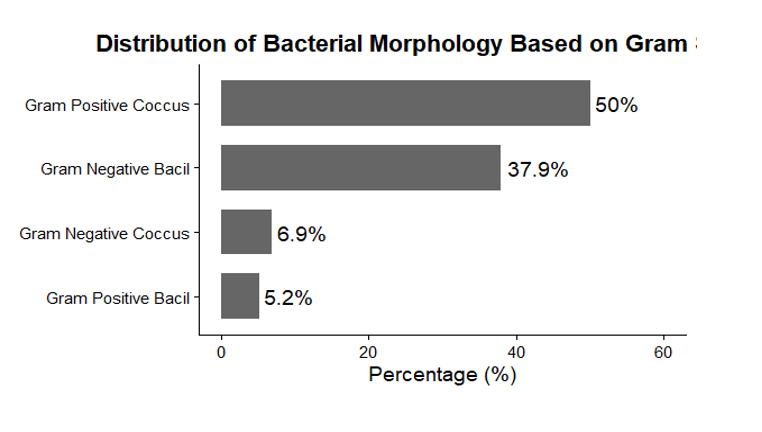
Results: All participants (100%) had fasting blood glucose levels within the diabetic range (≥126 mg/dL), indicating persistent hyperglycemia. Likewise, all saliva samples showed high bacterial counts (>100,000 CFU/mL). Gram-positive bacteria were more predominant than Gram-negative bacteria, accounting for 55.2% and 44.8% of the bacterial isolates, respectively.
Conclusions: Patients with diabetes mellitus exhibited persistent hyperglycemia, high salivary bacterial counts, and a predominance of Gram-positive bacteria. These findings provide baseline information on the salivary bacterial profile of patients with diabetes mellitus and emphasize the importance of maintaining glycemic control and oral hygiene as part of comprehensive diabetes care.
References
1. Banday M, Sameer A, Nissar S. Pathophysiology of diabetes: An overview. Avicenna J Med. 2020;10:174–88.
2. Shahbaz M, Kazmi F, Majeed HA, Manzar S, Qureshi FA, Rashid S. Oral Manifestations: A Reliable Indicator for Undiagnosed Diabetes Mellitus Patients. Eur J Dent. 2023 Jul;17(3):784–9.
3. Mohseni Homagarani Y, Adlparvar K, Teimuri S, Tarrahi MJ, Nilchian F. The effect of diabetes mellitus on oral health-related quality of life: A systematic review and meta-analysis study. Front public Heal. 2023;11:1112008.
4. Rohani B. Oral manifestations in patients with diabetes mellitus. World J Diabetes. 2019 Sep;10(9):485–9.
5. D’souza LL, Lawande SA, Samuel J, Wiseman Pinto MJ. Effect of salivary urea, pH and ureolytic microflora on dental calculus formation and its correlation with periodontal status. J oral Biol craniofacial Res. 2023;13(1):8–12.
6. Lynge Pedersen AM, Belstrøm D. The role of natural salivary defences in maintaining a healthy oral microbiota. J Dent. 2019 Jan;80 Suppl 1:S3–12.
7. Bechir F, Pacurar M, Tohati A, Bataga SM. Comparative Study of Salivary pH, Buffer Capacity, and Flow in Patients with and without Gastroesophageal Reflux Disease. Int J Environ Res Public Health. 2021 Dec;19(1).
8. Li Y, Qian F, Cheng X, Wang D, Wang Y, Pan Y, et al. Dysbiosis of Oral Microbiota and Metabolite Profiles Associated with Type 2 Diabetes Mellitus. Microbiol Spectr. 2023 Feb;11(1):e0379622.
9. Nageeb WM, Abo-Elsoud AAE, Amin MK, Mahmoud TMNMK, Abdou NESF. Comparative evaluation of oral microbiologic profile in children with Type 1 Diabetes Mellitus versus healthy controls and its relation to oral health status. BMC Oral Health. 2025 May;25(1):698.
10. International Diabetes Federation (IDF). Indonesia – International Diabetes Federation [Internet]. 2025 [cited 2026 May 26]. Available from: https://diabetesatlas.org/data-by-location/country/indonesia/
11. Dinas Kesehatan Provinsi Bali. Profil Kesehatan Provinsi Bali Tahun 2023 [Internet]. Denpasar Bali; 2024. Available from: https://diskes.baliprov.go.id/download/profil-kesehatan-bali-2023
12. Al-Janabi AAHS. A Positive or Negative Connection of Diabetes Mellitus to the Oral Microbiota. Eurasian J Med. 2023 Feb;55(1):83–9.
13. Qin H, Li G, Xu X, Zhang C, Zhong W, Xu S, et al. The role of oral microbiome in periodontitis under diabetes mellitus. J Oral Microbiol. 2022;14(1):2078031.
14. Elbehiry A, Marzouk E, Alhumaydhi FA, Abalkhail A. Diabetes Mellitus as an Integrated Microbiome, Immune, and Metabolic Disorder with Clinical Implications for Multisystem Complications and Public Health. J Clin Med. 2026 Feb;15(5).
15. Darwitz BP, Genito CJ, Thurlow LR. Triple threat: how diabetes results in worsened bacterial infections. Infect Immun. 2024 Sep;92(9):e0050923.
16. Mauri-Obradors E, Estrugo-Devesa A, Jané-Salas E, Viñas M, López-López J. Oral manifestations of Diabetes Mellitus. A systematic review. Med Oral Patol Oral Cir Bucal. 2017 Sep;22(5):e586–94.
17. Yang Y, Liu S, Wang Y, Wang Z, Ding W, Sun X, et al. Changes of saliva microbiota in the onset and after the treatment of diabetes in patients with periodontitis. Aging (Albany NY). 2020 Jul;12(13):13090–114.
18. Soundaram B, Murali CR, Ajithkumar M, Anjali A, JothiPriya D, Vikraman S. Evaluation of Oral Microflora-Related to Dental Caries and Salivary pH in type II Diabetic Patients. J Pharm Bioallied Sci. 2024 Apr;16(Suppl 2):S1843–9.
19. Santos WS, Solon IG, Branco LGS. Impact of Periodontal Lipopolysaccharides on Systemic Health: Mechanisms, Clinical Implications, and Future Directions. Mol Oral Microbiol. 2025 Jun;40(3):117–27.
Downloads
Published
Issue
Section
Citation Check
License
Copyright (c) 2026 sri arjani ida ayu made, I Nyoman Gede Suyasa, I Nyoman Jirna, Nyoman Mastra, Cok Dewi Widhya Hana Sundari, Nursinta Riswandani

This work is licensed under a Creative Commons Attribution-ShareAlike 4.0 International License.
- Articles published in Meditory are licensed under Creative Commons Attribution-ShareAlike 4.0 International license. You are free to copy, transform, or redistribute articles for any lawful purpose in any medium, provided you give appropriate credit to the original author(s) and Meditory, link to the license, indicate if changes were made, and redistribute any derivative work under the same license.
- Copyright on articles is retained by the respective author(s), without restrictions. A non-exclusive license is granted to Meditory to publish the article and identify itself as its original publisher, along with the commercial right to include the article in a hardcopy issue for sale to libraries and individuals.
- By publishing in Meditory, authors grant any third party the right to use their article to the extent provided by the Creative Commons Attribution-ShareAlike 4.0 International license.