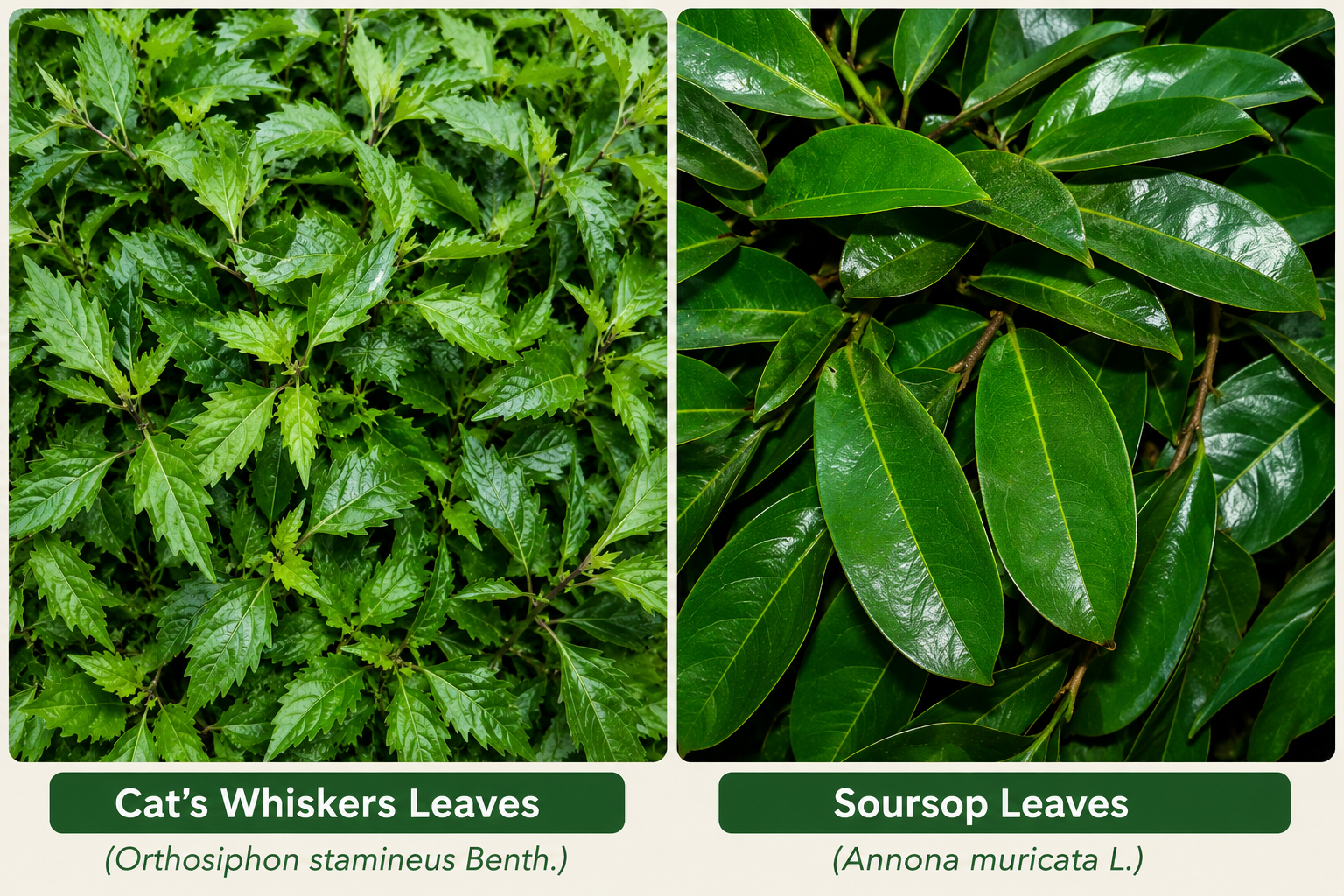
PHYTOCHEMICAL SCREENING AND ΑLFA AMYLASE INHIBITORY ACTIVITY OF ORTHOSIPHON STAMINEUS AND ANNONA MURICATA LEAF ETHANOLIC FRACTIONS
DOI:
https://doi.org/10.33992/meditory.v14i1.4898Keywords:
Orthosiphon stamineus, Annona muricata, α-amylase inhibition, flavonoids, antidiabetic activityAbstract
Background: Orthosiphon stamineus and Annona muricata are medicinal plants traditionally used for diabetes management because they contain bioactive compounds capable of inhibiting carbohydrate-hydrolyzing enzymes.
Objective: This study investigated the phytochemical composition and in vitro α-amylase inhibitory activity of the ethanolic leaf fractions of O. stamineus and A. muricata, individually and in combination.
Methods: Leaf powders were extracted by methanol maceration, followed by liquid–liquid partitioning using n-hexane and 96% ethanol to obtain the ethanolic fractions. Phytochemical screening and an in vitro experimental study of fractions to α-amylase inhibition assays were performed individually and in combinations, with acarbose as the positive control. Data were analyzed using one-way ANOVA followed by Tukey's HSD test (p < 0.05).
Results: Both ethanolic fractions contained alkaloids, flavonoids, and tannins. O. stamineus showed the highest α-amylase inhibitory activity (64.67%), followed by A. muricata (26.98%) and the 2:1 combination (59.74%), whereas the 1:1 combination exhibited the lowest inhibition (12.68%). Significant differences were observed among all treatments (p < 0.05).
Conclusions: O. stamineus demonstrated greater α-amylase inhibitory activity than A. muricata. Combining the two extracts did not improve α-amylase inhibition compared with O. stamineus alone under the experimental conditions evaluated.
References
1. Guevara-vásquez AM, Campos-florián JV, Dávila-castillo JH. Annona muricata L . extract decreases intestinal glucose absorption and improves glucose tolerance in normal and diabetic rats. 2021;10(3):359–66.
2. Magliano D, Boyko E. Diabetes Atlas [Internet]. 11th ed. International Diabetes Federation; 2025.
3. Ong KL, Stafford LK, McLaughlin SA, Boyko EJ, Vollset SE, Smith AE, et al. Global, regional, and national burden of diabetes from 1990 to 2021, with projections of prevalence to 2050: a systematic analysis for the Global Burden of Disease Study 2021. Lancet. 2023;402(10397):203–34.
4. Kashtoh H, Baek K hyun. New Insights into the Latest Advancement in α -Amylase. Plants. 2023;12(2944):1–28.
5. Kalinovskii AP, Sintsova O V., Gladkikh IN, Leychenko E V. Natural Inhibitors of Mammalian α-Amylases as Promising Drugs for the Treatment of Metabolic Diseases. Int J Mol Sci. 2023;24(22).
6. Mohamed EAH, Siddiqui MJA, Ang LF, Sadikun A, Chan SH, Tan SC, et al. Potent α-glucosidase and α-amylase inhibitory activities of standardized 50% ethanolic extracts and sinensetin from Orthosiphon stamineus Benth as anti-diabetic mechanism. BMC Complement Altern Med [Internet]. 2012;12(1):1. Available from: BMC Complementary and Alternative Medicine
7. Wang Q, Wang J, Li N, Liu J, Zhou J, Zhuang P, et al. A Systematic Review of Orthosiphon stamineus Benth. in the Treatment of Diabetes and Its Complications. Molecules. 2022;27(2):1–25.
8. Ahda M, Jaswir I, Khatib A, Ahmed QU, Mahfudh N, Ardini YD, et al. Phytochemical analysis, antioxidant, α-glucosidase inhibitory activity, and toxicity evaluation of Orthosiphon stamineus leaf extract. Sci Rep [Internet]. 2023;13(1):1–11. Available from: https://doi.org/10.1038/s41598-023-43251-2
9. Adefegha SA, Oyeleye SI, Oboh G. Distribution of Phenolic Contents, Antidiabetic Potentials, Antihypertensive Properties, and Antioxidative Effects of Soursop (Annona muricata L.) Fruit Parts in Vitro. Biochem Res Int. 2015;2015.
10. Atanu FO, Francis EO, Avwioroko OJ, Ibrahim RE, Adaji BI, Amos FI, et al. Chemical Profile, Antioxidant and Alpha-Amylase Inhibitory Activity of Leaves Extracts of Annona muricata: A Combined In vitro and In silico Study. Lett Appl NanoBioScience. 2022;11(2):3470–9.
11. Justino AB, Miranda NC, Franco RR, Martins MM, Silva NM da, Espindola FS. Annona muricata Linn. leaf as a source of antioxidant compounds with in vitro antidiabetic and inhibitory potential against α-amylase, α-glucosidase, lipase, non-enzymatic glycation and lipid peroxidation. Biomed Pharmacother [Internet]. 2018;100(January):83–92. Available from: https://doi.org/10.1016/j.biopha.2018.01.172
12. Ojo OA, Grant S, Amanze JC, Oni AI, Ojo AB, Elebiyo TC, et al. Annona muricata L. peel extract inhibits carbohydrate metabolizing enzymes and reduces pancreatic β-cells, inflammation, and apoptosis via upregulation of PI3K/AKT genes. PLoS One [Internet]. 2022;17(10 October):1–22. Available from: http://dx.doi.org/10.1371/journal.pone.0276984
13. Zubaidi SN, Nani HM, Saleh M, Kamal A, Qayyum TA, Maarof S, et al. Annona muricata : Comprehensive Review on the Ethnomedicinal , Phytochemistry , and Pharmacological Aspects Focusing on Antidiabetic Properties. 2023;
14. Shaikh JR, Patil M. Qualitative tests for preliminary phytochemical screening: An overview. Int J Chem Stud. 2020;8(2):603–8.
15. Padmasari PD, Astuti KW, Warditiani NK. Skrining Fitokimia Etanol 70% Rimpang Bangle (Zingiber purpureum Roxb.). Chromatographia. 2017;47(3–4):234–234.
16. Abidin AZ, Gunawan DA, Putra RP, Theodric D, Abidin T. Medicinal Plant Drying Using a Superabsorbent Polymer Dryer Incorporated with an Insulated Heater. Processes. 2022;10(11).
17. Eapen AS, Bhosale YK, Roy S. A Review on Novel Techniques Used for Drying Medicinal Plants and Its Applications. Int J Biomater. 2025;2025(1).
18. Safrina D, Susanti D, Khotimah AN. Analisis Konstanta Laju Pengeringan dan Karakter Simplisia Bunga Kamilen (Matricaria chamomilla L.) dengan Beberapa Metode Pengeringan. Agrointek. 2023;17(2):423–32.
19. Riasari H, Fauzi NI, Wibowo DP, Dayana MD. Lactagogue Activity of Aqueous Extract of Javanese Ginseng Leaves on Wistar Mice. Trop J Nat Prod Res. 2023;7(8):3643–6.
20. Xu W, Zhang J, Wu Y, Zhang Z, Wang X, Ma J. Influence of Five Drying Methods on Active Compound Contents and Bioactivities of Fresh Flowers from Syringa pubescens Turcz. Molecules. 2023;28(23):1–18.
21. Plaskova A, Mlcek J. New insights of the application of water or ethanol-water plant extract rich in active compounds in food. Front Nutr. 2023;10(March).
22. Faramayuda F, Riyanti S, Pratiwi AS, Mariani TS, Elfahmi E, Sukrasno S. Isolasi Sinensetin dari Kumis Kucing (Orthosiphon aristatus Blume miq.) Varietas Putih. JPSCR J Pharm Sci Clin Res. 2021;6(2):111.
23. Kumar P, Natsir H, Soekamto NH. Phytochemical analysis and antioxidant activity of soursop leaf extract (Annona muricata Linn.). J Phys Conf Ser. 2019;1341(3).
24. Widyastuti MS, St. R, Abdullah T. Kandungan Kimia (Flavonoid Total) dan Aktivitas Antioksidan Ekstrak Daun Kumis Kucing (Orthosiphon aristatus). J Kim. 2014;8(2).
25. Mungwari A, Zhao R, Liu Q. Recent advances in solvent extraction of plant bioactives: Factors affecting yield and selectivity. Sep Purif Technol. 2024;351:124276.
26. Bhadange YA, Carpenter J, Saharan VK. A Comprehensive Review on Advanced Extraction Techniques for Retrieving Bioactive Components from Natural Sources. ACS Omega. 2024;9(29):31274–97.
27. Abubakar AR, Haque M. Preparation of Medicinal Plants: Basic Extraction and Fractination Procedures for Experimental Purposes. Asian J Pharm Clin Res. 2017;7(10):1–5.
28. Chatepa LEC, Mwamatope B, Chikowe I, Masamba KG. Effects of solvent extraction on the phytoconstituents and in vitro antioxidant activity properties of leaf extracts of the two selected medicinal plants from Malawi. BMC Complement Med Ther [Internet]. 2024;24(1). Available from: https://doi.org/10.1186/s12906-024-04619-7
29. Susanti I, Pratiwi R, Rosandi Y, Hasanah AN. Separation Methods of Phenolic Compounds from Plant Extract as Antioxidant Agents Candidate. Plants. 2024;13(7):1–38.
30. Goulart AC, Rodrigues AAZ, Heleno FF, Faria AM de, Goulart SM, Queiroz MELR de. Liquid-liquid and solid-liquid extractions with low-temperature partitioning – A review. Anal Chim Acta [Internet]. 2024;1316(June):342795. Available from: https://doi.org/10.1016/j.aca.2024.342795
31. Wang L, Kong D, Tian J, Zhao W, Chen Y, An Y, et al. Tapinanthus species: A review of botany and biology, secondary metabolites, ethnomedical uses, current pharmacology and toxicology. J Ethnopharmacol [Internet]. 2022;296(June):115462. Available from: https://doi.org/10.1016/j.jep.2022.115462
32. Barbouchi M, Benzidia B, Elamrani K, Sabiri M, El Idrissi M, Choukrad M. Phytochemical screening, quantitative analysis and antioxidant properties of crude extracts from stems, leaves, and flowers of three Ruta species. Kuwait J Sci [Internet]. 2024;51(4):100287. Available from: https://doi.org/10.1016/j.kjs.2024.100287
33. Safarini E, Wisnu Kusuma E, Ingrid Anggraini D. Uji Efek Antidiabetes Kombinasi Ekstrak Daun Asam Jawa (Tamarindus Indica L.) Dan Daun Sirsak (Annona Muricata L.) Terhadap Kadar Glukosa Darah Pada Tikus Yang Diinduksi Aloksan. JFSP [Internet]. 2019;5(2):78–85. Available from: http://journal.ummgl.ac.id/index.php/pharmacy
34. Waras Nurcholis, Fachrur Rizal Mahendra, Milanda Fiorella Gultom, Safira Khoirunnisa, Mayang Anggita Cahya Kurnia, Hamdan Hafizh Harahap. Phytochemical, Antioxidant and Antibacterial Screening of Orthosiphon stamineus Leaf Extract Two Phenotypes. J Jamu Indones. 2022;7(3):121–9.
35. Maheshwaran L, Nadarajah L, Senadeera SPNN, Ranaweera CB, Chandana AK, Pathirana RN. Phytochemical Testing Methodologies and Principles for Preliminary Screening/ Qualitative Testing. Asian Plant Res J. 2024;12(5):11–38.
36. Misra RC, Thimmappa R, Bonfill M. Editorial: Advances in discoveries of plant phytochemicals. Front Plant Sci. 2024;15(April):1–4.
37. Sholihati AM, Baharuddin M, Santi. Produksi dan Uji Aktivitas dari Bakteri Bacillus subtilis. Al Kim. 2015;78–90.
38. Kato CG, De Almeida Gonçalves G, Peralta RA, Seixas FAV, De Sá-Nakanishi AB, Bracht L, et al. Inhibition of α -Amylases by Condensed and Hydrolysable Tannins: Focus on Kinetics and Hypoglycemic Actions. Enzyme Res. 2017;2017.
39. Lam TP, Tran NVN, Pham LHD, Lai NVT, Dang BTN, Truong NLN, et al. Flavonoids as dual-target inhibitors against α-glucosidase and α-amylase: a systematic review of in vitro studies. Nat Products Bioprospect [Internet]. 2024;14(1). Available from: https://doi.org/10.1007/s13659-023-00424-w
40. Martinez-Gonzalez AI, Díaz-Sánchez G, de la Rosa LA, Bustos-Jaimes I, Alvarez-Parrilla E. Inhibition of α-amylase by flavonoids: Structure activity relationship (SAR). Spectrochim Acta - Part A Mol Biomol Spectrosc [Internet]. 2019;206:437–47. Available from: https://doi.org/10.1016/j.saa.2018.08.057
41. Akshatha JV, SantoshKumar HS, Prakash HS, Nalini MS. In silico docking studies of α-amylase inhibitors from the anti-diabetic plant Leucas ciliata Benth. and an endophyte, Streptomyces longisporoflavus. 3 Biotech [Internet]. 2021;11(2):1–16. Available from: https://doi.org/10.1007/s13205-020-02547-0
42. Barik SK, Sengupta S, Arya R, Kumar S, Kim JJ, Chaurasia R. Dietary Polyphenols as Potential Therapeutic Agents in Type 2 Diabetes Management: Advances and Opportunities. Adv Nutr [Internet]. 2025;16(1):100346. Available from: https://doi.org/10.1016/j.advnut.2024.100346
Downloads
Published
Issue
Section
Citation Check
License
Copyright (c) 2026 Baiq Risma Fatmayanti, Sri Wardiatul Fitri, Arief Rafsanjani

This work is licensed under a Creative Commons Attribution-ShareAlike 4.0 International License.
- Articles published in Meditory are licensed under Creative Commons Attribution-ShareAlike 4.0 International license. You are free to copy, transform, or redistribute articles for any lawful purpose in any medium, provided you give appropriate credit to the original author(s) and Meditory, link to the license, indicate if changes were made, and redistribute any derivative work under the same license.
- Copyright on articles is retained by the respective author(s), without restrictions. A non-exclusive license is granted to Meditory to publish the article and identify itself as its original publisher, along with the commercial right to include the article in a hardcopy issue for sale to libraries and individuals.
- By publishing in Meditory, authors grant any third party the right to use their article to the extent provided by the Creative Commons Attribution-ShareAlike 4.0 International license.