OPTIMIZATION EXTRACT OF NUTMEG FLESH (MYRISTICA FRAGRANS) NANOEMULSION SELF-NANOEMULSIFYING DRUG DELIVERY SYSTEM (SNEDDS) USING D-OPTIMAL MIXTURE DESIGN METHOD AS AN ANTI-INFLAMMATORY ACTIVITY
DOI:
https://doi.org/10.33992/meditory.v14i1.4807Keywords:
Nutmeg flesh, Myristica fragrans, Nanoemulsion, SNEDDS, D-optimal mixture design, Anti-inflammatoryAbstract
Background: Nutmeg flesh (Myristica fragrans), known to contain flavonoid compounds with anti-inflammatory activity. Extract of nutmeg flesh can be formulated into nanoemulsion using the SNEDDS technique represents an innovative drug delivery method that enhances drug absorption in the body.
Objective: This study aimed to determine the optimal formulation extract of nutmeg flesh (Myristica fragrans) nanoemulsion preparation using the SNEDDS technique as an anti-inflammatory.
Methods: This research employs an experimental design, with data collection carried out through observation and measurement scales. Observations are conducted on the evaluation of the physical quality of the nanoemulsion formulation, as well as on the anti-inflammatory activity test using male white mice (Mus musculus).
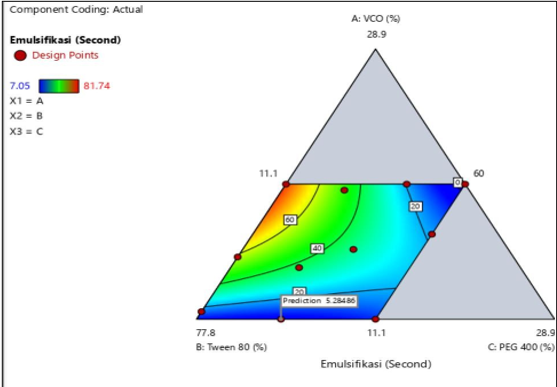
Results: The analytical findings confirmed the presence of flavonoids as secondary metabolites in nutmeg extract. The optimal formula consisted of VCO (11%), Tween 80 (73%), and PEG 400 (15%), with predicted values of viscosity at 347 mPas, transmittance at 97.8%, emulsification time of 5 seconds, and a desirability value of 1. The anti-inflammatory activity, based on the percentage of inhibition, showed a high result in the SNEDDS test group, with an inhibition rate of 90%.
Conclusions: Our study revealed that the SNEDDS extract of nutmeg flesh contains secondary metabolites and exhibits strong anti-inflammatory activity.
References
1. Mulya F. Analisis Kesiapan Pencegahan dan Pengendalian Penyakit Tidak Menular di Indonesia Berdasarkan Sistem Kesehatan Nasional. Fakultas Kesehatan Masyarakat Universitas Indonesia. 2020;12(3):1–18.
2. Jahnavi K, Pavani Reddy P, Vasudha B, Narender B. Non-steroidal anti-inflammatory drugs: an overview. Journal of Drug Delivery and Therapeutics. 2019 Feb 15;9(1-s):442–8.
3. Pauzan P. Profile Anti-Inflammatory Mechanisms of Moringa Leaves: A Review of Preclinical and Clinical Studies. Jurnal Biologi Tropis. 2025 Jul 9;25(3):2605–13.
4. Arsana IN. Medicinal Plant Diversity in Lontar Manuscripts “Taru Pramana” and It Uses for Traditional Balinese Medicine. Jurnal Kajian Bali. 2019 Apr 27;9(1):241–62.
5. Azrial F. Potential of bioactive compounds in Indonesian endemic Nutmeg (Myristica fragrans and Myristica argentea) and their applications in health: An overview. Journal of Evidence-based Nursing and Public Health. 2025 Aug 31;2(02).
6. Guntur G, Harlia H, Sapar A. Identifikasi Komponen Minyak Atsiri Daging Buah Pala (Myristica Fraghans Houtt.) Asal Pulau Lemukutan dan Uji Aktivitas Antiinflamasi Menggunakan Metode Stabilisasi Menbran RBCs (Red Blood Cells). Al-Kimia. 2019 Dec 29;7(2).
7. Nur A, Fiskia E, Rahman I. Aktivitas Antiinflamasi Daging Buah Pala (Myristica fragrans Houtt.) Pada Tikus Putih Yang Diinduksi Karageenan. JFIOnline | Print ISSN 1412-1107 | e-ISSN 2355-696X. 2022 Jan 31;14(1):10–6.
8. Priani SE, Putri CA, Eka Darma GC, Mulkiya K, Syafnir L. Formulasi Nanoemulsi Antioksidan Mengandung Ekstrak Etanol Teh Hijau dan Minyak Calendula. Majalah Farmasetika. 2024 Jan 9;9(2):193.
9. Hanistya R, Kartika Sari A, Wahyuningsih E, Samlan K, Dessidianti R, Irma Wiputri O. Review Artikel: Desain dan Karakteristik Self Nano Emulsifying Drug Delivery System (SNEDDS). 2023. vol. 2 (2).
10. Syukri Y, Nugroho BH, Istanti I. Penggunaan D-Optimal Mixture Design untuk Optimasi dan Formulasi Self-Nano Emulsifying Drug Delivery System (SNEEDS) Asam Mefenamat. Jurnal Sains Farmasi & Klinis. 2020 Dec 28;7(3):180.
11. Elfia HY, Susilo S. An update on the pharmacology, phytochemistry, and toxicity of Myristica fragrans Houtt. as a source of treatment: A scoping review. Vol. 13, Journal of Applied Pharmaceutical Science. Open Science Publishers LLP Inc.; 2023. p. 92–106.
12. Melati Sirait S, Enriyani R, Studi Penjaminan Mutu Industri Pangan P, AKA Bogor P, Studi Analisis Kimia P, AKA Bogor Jl Pangeran Sogiri No P, et al. Skrining Fitokimia dan Pengaruh Cara Pengeringan Terhadap Kualitas Ekstrak Etanol Daging Buah Pala (Myristica fragrans Houtt). Vol. 45.
13. Tungadi R, Thomas NA, Gobel WG Van. Formulasi, Karakterisasi, Dan Evaluasi Drops Liquid Self Nano-Emulsifying Drug Delivery System (SNEDDS) Astaxanthin. Indonesian Journal of Pharmaceutical Education. 2021 Nov 3;1(3):168–78.
14. Ma L, Yang L, Tang L, Wang Y, Luo H, Zhong Z, et al. Sample preparation techniques for quality evaluation and safety control of medicinal and edible plants: Overview, advances, applications, and future perspectives. J Pharm Anal. 2025 Apr;101296.
15. Yuwanda A, Adina AB. Pengembangan Snedds Ekstrak Daun Pepaya (Carica Papaya L.) untuk Meningkatkan Efikasi Anthelmintik dalam Praktik Keperawatan. Malahayati Nursing Journal. 2025 Apr 1;7(4):1449–62.
16. Yesika st, Noval st, Tuti Alawiyah st, Mia st. Formulation of Self-Nanoemulsifying Drug Delivery System (SNEDDS) Broccoli Ethanol Extract (Brassica oleracea Var. Italica). 2025.
17. Fitriah WOI, Pratama ZAP, Andriani R, Fauziah R, Isrul M. Optimasi dan Karakterisasi Self-Nanoemulsifying Drug Delivery System (SNEDDS) Ekstrak Etanol Daun Kirinyuh (Chromolaena odorata L.). Jurnal Mandala Pharmacon Indonesia. 2023 Dec 25;9(2):383–95.
18. Antioksidan A, Emulasi M, Dengan Penambahan V, Ubi E, Ungu J, Syaron Manongko P, et al. Antioxidant Activity of Vco Emulsion Beverages with the Addition of Purple Sweet Potato Extract [Internet]. Vol. 5. Available from: https://ejournal.unsrat.ac.id/index.php/samrat-agrotek
19. Choironi NA, Pudyastuti B, Gumelar G, Fareza MS, Wijaya TH, Setyono J. Optimasi Formula Self-Nanoemulsifying Drug Delivery System (SNEDDS) Etil-p-metoksisinamat (EPMS). ALCHEMY Jurnal Penelitian Kimia. 2022 Sep 24;18(2):205.
20. Sumitra J, Navita E, Pasaribu R. Anti-Inflammatory Excitivity Test of Sintrong Leaf Ethanol Extract (Crassocephalum crepidiodes) On Male White Mice Efektivitas Antiinflamasi Ekstrak Etanol Daun Sintrong (Crassocephalum Crepidiodes) Pada Mencit Putih Jantan [Internet]. Vol. 5. Available from: http://ejournal.medistra.ac.id/index.php/JFM
21. Nur A, Nur SH, S. Somadayo NA, Rajih MF. Efektivitas ekstrak daging buah pala (Myristica fragrans Houtt) terhadap histopatologi hati pada tikus hiperglikemia. Jurnal SAGO Gizi dan Kesehatan. 2024 Nov 22;5(3B):881.
22. Buya AB, Beloqui A, Memvanga PB, Préat V. Self-nano-emulsifying drug-delivery systems: From the development to the current applications and challenges in oral drug delivery. Vol. 12, Pharmaceutics. MDPI AG; 2020. p. 1–52.
23. Mochtar CF, Devi RS, Hamzah H, Faradillah A, Hafidzah E, Varizza FP, et al. In-Vivo Anti-Inflammatory Activity of Kelubut Leaf Ethyl Acetate Extract (Passiflora foetida L.) from Samarinda City. Journal of Fundamental and Applied Pharmaceutical Science. 2023 Aug 29;4(1):15–22.
24. Udayani NNW, Mahendra IPA, Widiasriani IAP, Mahardika IMA, Wardani IGAAK. Anti-Inflammatory Activity Test of Dendrophthoe glabrescens (Blakely) Barlow Leaf Extract on Mice (Mus musculus) Induced with Carrageenan. Jurnal Ilmiah Medicamento. 2025 Sep 27;11(2):152–62.
25. Saputra Yasir A, Studi Rekayasa Kosmetik P, Teknologi Sumatera I, Terusan Ryacudu J, Hui W, Jati Agung K, et al. Studi in Silico Interaksi Molekuler Senyawa Aktif Pala (Myristica Fragrans Houtt.) Dengan Caspase-1 Sebagai Target Anti-Inflamasi Pada Jerawat [Internet]. Vol. 7. 2025. Available from: https://pubchem.ncbi.nlm.nih.gov/
Downloads
Published
Issue
Section
Citation Check
License
Copyright (c) 2026 Made Dwike Swari Santi, Ni Wayan Rika Kumara Dewi, Maureen Vianney

This work is licensed under a Creative Commons Attribution-ShareAlike 4.0 International License.
- Articles published in Meditory are licensed under Creative Commons Attribution-ShareAlike 4.0 International license. You are free to copy, transform, or redistribute articles for any lawful purpose in any medium, provided you give appropriate credit to the original author(s) and Meditory, link to the license, indicate if changes were made, and redistribute any derivative work under the same license.
- Copyright on articles is retained by the respective author(s), without restrictions. A non-exclusive license is granted to Meditory to publish the article and identify itself as its original publisher, along with the commercial right to include the article in a hardcopy issue for sale to libraries and individuals.
- By publishing in Meditory, authors grant any third party the right to use their article to the extent provided by the Creative Commons Attribution-ShareAlike 4.0 International license.